 For Individuals
 For Enterprises
 Coaching Matters
 International Coaching Week
 Ebooks
 Podcasts
 Blogs
Blogs Alchemy
Aarvi’s Story: A Mother’s Pain and Purpose
Aarvi (originally named Devansh) was a bright, artistic, empathetic child who made friends instantly, respected teachers by touching their feet, wrote songs, painted, and dreamed of becoming an influencer to help bullied children. A bubbly boy who changed his own name to “Aarvi” (meaning intelligent, powerful leader) after consulting his mother, he thrived on creativity and connection.
Yet, severe school bullying—including physical harassment, rumors labeling him transgender, and repeated humiliation—triggered anxiety, panic attacks (10-12 times a day at one point), and trauma. Despite therapy helping him recover temporarily, a combination of renewed bullying, teacher insensitivity (including denial of a scribe for his dyslexia), isolation during exams, and the school’s failure to act pushed him to the edge. In his suicide note, Aarvi wrote that “the school has killed me” and named specific individuals and authorities.
Aarti, a teacher with 20 years of experience, fought back. She filed complaints, recorded sessions, pursued a POCSO case against the perpetrators and the school for non-reporting, and continues seeking justice under police protection. Her grief never fades—she reads his letter weekly—but she transformed it into purpose. Today, as Internet Ki Mummy, she supports lakhs of children who call her “Mamma,” offering the listening ear and guidance many lack at home or school.
Her message is clear: nothing happens suddenly. Bullying, unaddressed trauma, academic pressure, and lack of support create a perfect storm.
The Alarming Rise of Student Suicides in India
India faces a deepening schooling crisis. According to NCRB data, student suicides rose 65% over a decade, from 8,423 in 2013 to 13,892 in 2023. Students now account for 8.1% of all suicides, up from 6.2%. Recent years show a 34% increase since 2019 alone.
Bullying, exam failure, family issues, and mental health struggles are key drivers. Cases linked to harassment in schools—including by peers and sometimes teachers—highlight systemic gaps: poor counseling, ignored complaints, and prioritization of reputation over child safety. Cyberbullying and online threats compound the problem, as seen in multiple sibling or group cases.
Aarti emphasizes that victims often suffer in silence due to threats (“we’ll do the same to your mother”) or fear of not being believed. Boys, like Aarvi, are not immune—good touch/bad touch education and consent discussions must apply to sons as well as daughters.
Recognizing the Warning Signs of Bullying and Distress
Children rarely disclose bullying immediately, especially under threat. Parents and teachers must watch for subtle changes. Common signs your child is being bullied include:
- Sudden drop in academic performance or loss of interest in schoolwork
- Reluctance or refusal to attend school; complaints about specific classes or routes
- Changes in eating habits (coming home hungry, skipping tiffin, or loss of appetite)
- Unexplained injuries, torn/dirty uniforms, or missing belongings
- Withdrawal: spending excessive time alone, sleeping more, or avoiding social activities
- Mood swings, anxiety, frequent headaches/stomachaches, or renewed panic attacks
- Loss of previously enjoyed hobbies or sudden untidiness
Aarti notes that even close parents can miss signs if the child hides trauma out of fear or shame. Dyslexia or other learning differences (like Aarvi’s in math) can worsen isolation if unaccommodated. Facial expressions upon returning from school often reveal more than words.
Teachers should monitor sudden behavioral shifts, declining grades, or isolation and create safe reporting channels, such as complaint boxes or designated counselors.
What Parents Should Do in the First 48 Hours (and Beyond)
If your child shares an incident—or you suspect one—act with empathy and urgency:
- Listen without judgment: Reassure them it’s not their fault. Avoid dismissing it as “normal fights” or blaming them. Aarti’s son questioned why victims must always suffer or leave school.
- Document everything: Note dates, incidents, names, and impacts. Save screenshots, voice recordings (with consent where legal), and emails.
- Communicate formally: Email the class teacher, coordinator, principal, and counselor. Written records create accountability—verbal complaints often vanish.
- Escalate if needed: Follow CBSE/ board guidelines. If the school fails to act, approach NCPCR, SCPCR, Child Welfare Committees, or the board itself. For serious cases involving sexual harassment/abuse, mandatory reporting under POCSO applies to schools and parents.
- Seek professional support: Therapy, counselors, or helplines. Create a safe home space with hugs, open conversations, and validation.
- Monitor and follow up: Persistent emails and chains of communication prevent issues from being buried.
In the critical early window, building the child’s confidence that “family is with me” can be lifesaving. Aarti stresses patience and love—even if mistakes occurred—because every parent was once a child.
Additional practical tips: Teach consent, boundaries, and resilience. Encourage bystanders to intervene or report rather than stay silent. Promote positive friendships and monitor online activity without invading privacy excessively.
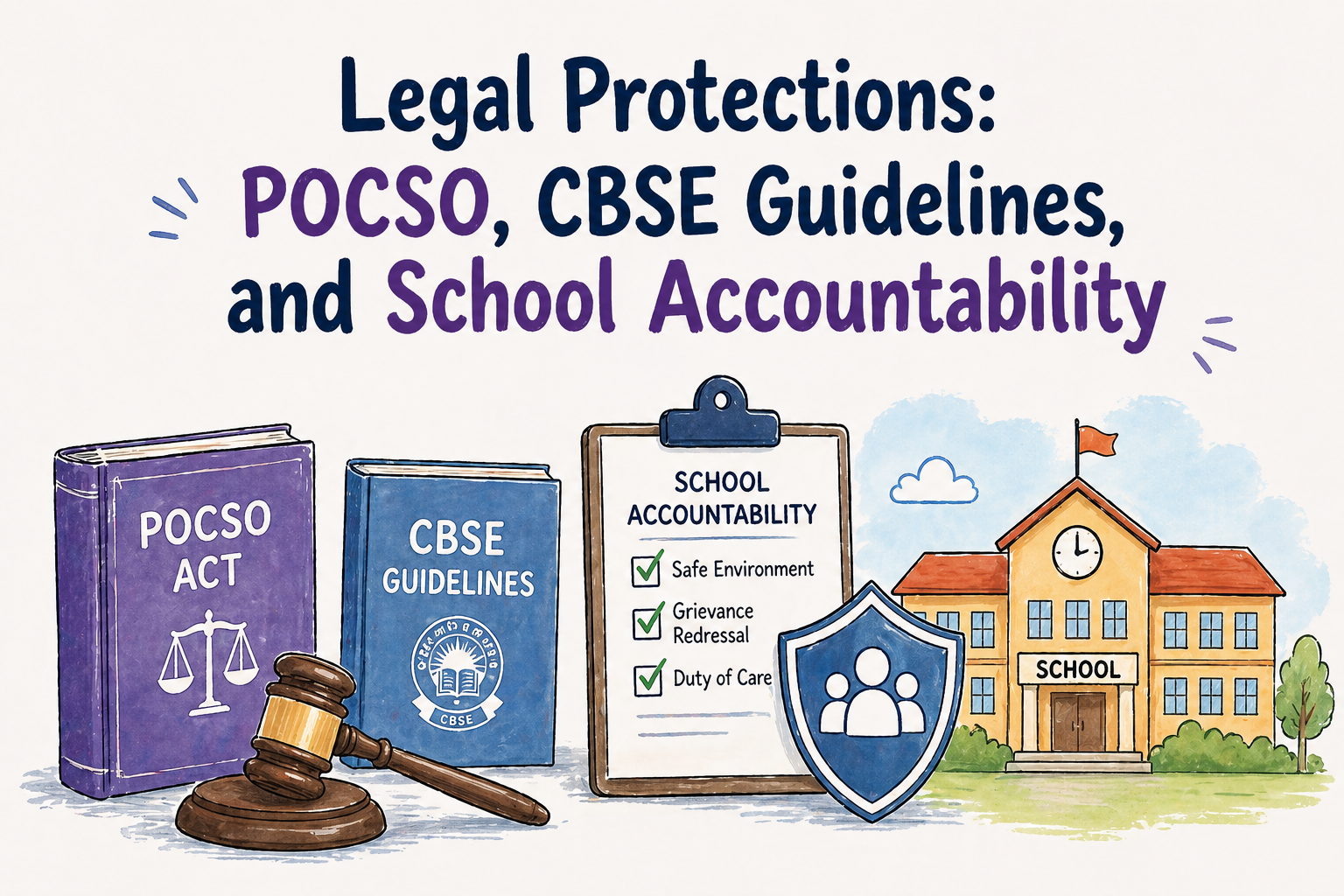
Legal Protections: POCSO, CBSE Guidelines, and School Accountability
The Protection of Children from Sexual Offences (POCSO) Act, 2012 is a gender-neutral law covering sexual assault, harassment, and pornography against children under 18. It mandates reporting; failure by schools or individuals can lead to penalties. Sections address aggravated cases, and schools must form complaint committees and report to police promptly.
CBSE and other boards have anti-bullying guidelines requiring:
- Anti-Bullying Committees
- Safe reporting mechanisms (complaint boxes, counselors)
- Awareness programs and positive school climate
- Action against perpetrators, including counseling, suspension, or restriction
- Mandatory POCSO compliance and child protection training
Schools cannot hide incidents to protect reputation. In Aarti’s case, the school faced cases for non-reporting, and Aarvi’s recordings and emails strengthened her pursuit of justice. Parents should know: even peer-on-peer acts can trigger POCSO if they involve sexual elements.
Documentation is your strongest ally—emails, recordings (where appropriate), and formal complaints create a paper trail for authorities, courts, or higher bodies like DCP or NCPCR.
If Your Child Is the Bully: Parental Responsibility
Not every call Aarti receives is from victims. Some parents discover their child is bullying others. Respond with firmness and education:
- Have calm, honest conversations: Explain how “jokes” or exclusion can destroy lives and lead to legal consequences.
- Teach empathy: “Would you want this done to you?” Emphasize being a “big person,” not a bully.
- Set clear boundaries and consequences at home; monitor phone/internet use.
- Collaborate with the school for counseling.
- Model respectful behavior—children absorb actions more than lectures. Power, money, or connections should never justify harm.
Parents of bullies often unknowingly enable through normalization or lack of oversight. Early intervention prevents escalation.
Becoming “Internet Ki Mummy”: Turning Grief into Advocacy and Support
After Aarvi’s death, Aarti organized a candle march, immersed his ashes, and fought systemic silence. Despite losing colleagues’ support and facing threats, she persisted. Social media—initially set up by Aarvi—became her platform. Influencers and young supporters helped her reach millions; one reel garnered 35 million views.
Today, she fields calls from children facing bullying, 30-year-olds still scarred by childhood trauma, single parents, and families in distress. She reminds them: you are important, never compare yourself, share with a trusted person. Her “chosen family” of supporters fills the void while healing her own grief—listening to others heals her too.
She advocates for better mental health awareness, consent education for all children, dyslexia screening, scribe accommodations, and teacher training. Helplines (like 1098 Childline) and professional counseling are vital resources.
Summary and Call-to-Action
Aarvi’s tragic story and Aarti Malhotra’s resilience underscore a national emergency: bullying in Indian schools, inadequate mental health support, and institutional failures are costing young lives. With student suicides up 65% in a decade, parents cannot afford complacency. Recognize signs early, document and escalate complaints, understand laws like POCSO, teach consent and empathy, and build open home-school communication.
What you can do today:
- Talk to your child openly before dropping them at school tomorrow.
- Review your school’s anti-bullying policy and POCSO compliance.
- Share this post with other parents and teachers.
- If your child (or any child you know) is struggling, reach out—listen, document, and act.
Comment below: What signs have you noticed, or what steps has your family taken? Tag a parent who needs this. For immediate help, contact Childline (1098) or local mental health resources. Together, we can create safer schools and honor children like Aarvi by protecting the next generation.