
 For Individuals
 For Enterprises
 Coaching Matters
 International Coaching Week
 Ebooks
 Podcasts
 Blogs
Blogs Community
In the world of self-development, few disciplines test the limits of physical, mental, and emotional resilience like martial arts.
Shifu Kanishka Sharma, India’s first Shaolin warrior monk and a master of nine martial arts, brings a unique perspective to this realm. Trained at the Shaolin Temple and a mentor to commandos, celebrities, and civilians alike, Shifu Kanishka has spent over four decades honing his craft. In an engaging episode of xMonks Drive with host Gaurav Arora, he delves into the stark differences between Mixed Martial Arts (MMA) and real street fights, offering profound insights into the mindset, discipline, and philosophy required to navigate high-stakes combat scenarios. This blog explores Shifu Kanishka’s journey, the science and art of martial arts, and the practical lessons for personal growth that transcend the dojo and the street.
The Shaolin Journey: A Path to Mastery
Shifu Kanishka’s story begins in childhood, sparked by a driver named Suraj Bai who introduced him to kung fu movies like 36 Chambers of Shaolin. At just seven years old, Kanishka was captivated, declaring his ambition to become a Shaolin monk. This wasn’t a fleeting childhood whim but a lifelong obsession that led him to the Shaolin Temple in China in 2001. There, he faced grueling training—seven hours a day, six days a week—under conditions that tested his resolve. From public showers to sleeping on a concrete floor after being temporarily expelled for perceived lack of commitment, Kanishka’s journey was anything but glamorous. Yet, these hardships forged a mindset of resilience, humility, and unwavering focus.
A pivotal moment came when, after losing his luggage and money, Kanishka was ready to abandon his dream and return home. His mother’s refusal to entertain his plea to return—“Don’t call me for that,” she said—forced him to confront his purpose. Standing before the Shaolin Temple, he realized he had dreamed of this moment since childhood. This epiphany transformed his pain into determination, leading him to train “like a mad man.” His perseverance paid off when his Shifu accepted him as a disciple in a sacred Bishi ceremony, integrating him into the Shaolin lineage as a 34th-generation warrior monk. This journey underscores a core self-development principle: true growth requires embracing discomfort and committing fully to one’s passion.
MMA vs. Street Fights: A Fundamental Divide
Shifu Kanishka draws a clear line between MMA and street fights, emphasizing that while MMA is a formidable combat sport, it operates within a controlled environment that starkly contrasts the unpredictability of real-world confrontations. “MMA is one of the toughest sports, no doubt about it,” he acknowledges, “but it’s one-on-one. It’s like sanda—you know you’re safe in that cage. There’s a referee, and you only fight this guy.” In contrast, street fights are chaotic, involving multiple opponents, potential weapons, and no rules. “It’s not just this guy, it’s also that guy, and I don’t know who else,” he explains.
MMA trains fighters for structured competition, focusing on techniques like striking, grappling, and submissions within a regulated framework. Street fights, however, demand a broader skill set: long-range striking, close-quarter combat, takedowns, and defense against edged or impact weapons. Kanishka highlights the need for “stack and shield” strategies to manage multiple attackers and emphasizes the importance of ending a confrontation quickly—ideally within three seconds—to avoid escalation. This distinction reveals a key self-development lesson: preparation for controlled environments differs vastly from readiness for unpredictable chaos. To grow, one must train for adaptability, not just mastery of a single domain.
The Science and Art of Martial Arts
Kanishka views martial arts as both a science and an art, rooted in mathematics and human physiology. He breaks down combat into numerical principles—three, four, five, eight, and twelve—that govern technique and strategy. The number three, for instance, represents the triangle, the strongest geometric structure. “Your body is a triangle,” he explains. “If I off-balance one axis of your triangle, I control you without force.” This principle allows a martial artist to neutralize an opponent efficiently, emphasizing precision over brute strength.
The number four relates to the body’s four limbs and the angles created when two lines (or limbs) intersect, providing multiple attack or defense options. Five corresponds to the five senses and vital organs, critical targets in combat. Eight symbolizes infinity, reflected in fluid, circular movements like a figure-eight block, while twelve underscores the complexity of advanced techniques. These principles highlight the scientific precision of martial arts, where every movement is calculated to maximize efficiency.
Yet, martial arts is also an art, requiring creativity and emotional depth. Kanishka compares a martial artist to a painter, noting that each encounter is unique, shaped by the practitioner’s emotional state and intent. This blend of science and art fosters a mindset of continuous learning and adaptability, essential for personal growth. By mastering both the technical and expressive aspects of martial arts, individuals cultivate discipline, creativity, and resilience—qualities that translate to all areas of life.
The Psychological and Emotional Impact of Combat Readiness
Being “fight-ready” at all times, as Kanishka describes, has profound psychological and emotional effects. “I know how much hurt I can give you, and that’s why I won’t hit you,” he says, embodying the paradox of the warrior monk: immense power tempered by restraint. This mindset stems from Shaolin’s integration of Zen (Chan) Buddhism, which emphasizes calmness amid chaos. Kanishka explains, “Meditation is not about de-stressing; it’s about finding stillness in chaos.” Training in high-stress scenarios—such as running up a 1,000-meter mountain and crawling back in 20 minutes—rewires the brain to remain calm under pressure.
Neurologically, intense training builds muscle memory and hones reflexes, allowing practitioners to respond instinctively in a fight. Kanishka recounts surviving a knife attack and fighting five opponents, describing how adrenaline and cortisol create a “slow-motion” effect, enabling precise reactions. Emotionally, this readiness fosters confidence and humility. Knowing one’s capacity for violence instills a responsibility to avoid it, aligning with the Shaolin principle of compassion. For self-development, this teaches the value of emotional regulation and the power of staying composed in high-stakes situations, whether in combat or daily life.
Shaolin Kung Fu: Beyond Fighting
Shaolin Kung Fu, as Kanishka explains, is not just about fighting but encompasses Zen, martial arts, and medicine. “Kung fu is energy and time,” he says. “Anything done with the right energy and timing becomes kung fu.” This philosophy extends to everyday tasks—cooking, standing guard, or training—each an opportunity for mindfulness. Unlike sports like MMA, which focus on competition, Shaolin Kung Fu cultivates a holistic approach to life, blending physical prowess with spiritual growth.
Kanishka’s training included not just combat but also healing techniques and Chan Buddhism, which emphasizes enlightenment through practice rather than scripture. This holistic approach transformed his perspective, teaching him to find purpose in hardship. For instance, when his Shifu made him perform menial tasks like cooking for the temple, Kanishka learned humility and the value of service. This mindset is a cornerstone of self-development: true mastery involves embracing all aspects of life, from the mundane to the profound, with equal dedication.
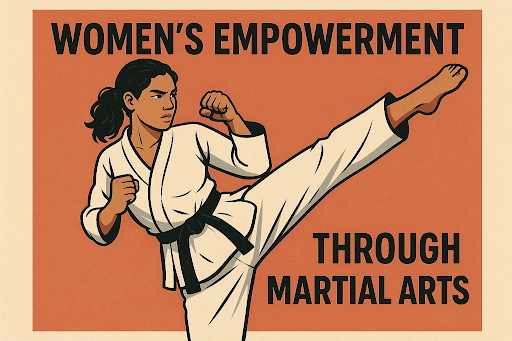
Women’s Empowerment Through Martial Arts
Kanishka challenges the term “women’s self-defense,” arguing it positions women as victims. Instead, he advocates for “women’s empowerment,” equipping women with tools to feel confident and safe. “It’s less about fighting and more about surviving,” he notes. His Shifu Kanishka Combatives system, a distillation of his 42 years of training, includes 108 techniques for empty-hand combat, weapons, and locks, designed to be instinctive and adaptable. For women, this means learning to neutralize threats efficiently, using principles like off-balancing an opponent’s triangle to escape danger.
Kanishka’s advice for avoiding street confrontations is practical: never walk alone on isolated routes, stay aware of your surroundings, and maintain physical and mental alertness. These principles empower not just women but anyone to take control of their safety. In self-development, this translates to proactive awareness and preparedness, ensuring one is never caught off guard in life’s unpredictable moments.
Training the Elite: From Commandos to Celebrities
Kanishka’s expertise extends to training military personnel, special forces, and Bollywood stars like Shah Rukh Khan and Akshay Kumar. His work with the Indian Army’s Special Forces, particularly in close-quarter combat and knife fighting, earned him a six-year tenure as a close combat mentor. He attributes this opportunity to Colonel Saha, who recognized the need for specialized training beyond MMA or traditional martial arts. Kanishka’s approach emphasizes practical, no-nonsense techniques tailored to real-world scenarios, not just sport.
Training celebrities presented different challenges. Kanishka recounts working with a Hollywood actress who initially arrived late, prompting him to set boundaries: “If she comes late, I won’t teach her.” This led to mutual respect and punctuality. With Shah Rukh Khan, Kanishka was impressed by his humility and commitment, training him for five months without rigs or dummies for an action film. These experiences highlight a universal self-development principle: discipline and respect are non-negotiable, regardless of status. By setting clear expectations, Kanishka fostered accountability, a lesson applicable to any leadership or collaborative endeavor.
The Cost of Mastery: Sacrifice and Commitment
Kanishka’s journey to mastery came at a steep cost. Physically, he endured grueling training that left him in pain daily, often crying from exhaustion. Emotionally, he faced moments of doubt, like when his luggage was lost, or when his Shifu threw his bags out for perceived disrespect. Spiritually, he embraced the Shaolin ethos of humility, learning from a 10-year-old instructor despite his prior experience in karate and kung fu. Psychologically, he battled ego, learning to respect all teachers, regardless of age or status.
His father’s advice shaped his path: “Make your passion your profession, and be the best at it. To be the best, you must go mad over it—101% commitment.” This required sacrificing comfort, time, and resources—Kanishka estimates spending millions on his training. Yet, he views knowledge as the ultimate investment, echoing his father’s words: “Money is not your fixed deposit; knowledge is.” For self-development, this underscores the importance of relentless dedication to one’s craft, even when progress feels stagnant, as outlined in the “plateau” concept from Mastery by Robert Greene.
Maintaining the Beginner’s Mindset
Kanishka’s ability to maintain a “beginner’s mindset” is central to his philosophy. He credits his father, a seasoned journalist who never lost his reporter’s curiosity, for this approach. “I was a reporter until my last breath,” his father said, despite being an editor. Similarly, Kanishka remains a student, open to learning from anyone, including a young instructor at Shaolin. This humility allows him to evolve continuously, avoiding the trap of complacency.
In self-development, the beginner’s mindset is a powerful tool. It encourages curiosity, openness to feedback, and resilience against setbacks. Kanishka’s story of apologizing to his Shifu after being expelled and sleeping outside the temple exemplifies this. By bowing down and committing to train harder, he transformed failure into growth, a lesson for anyone striving to improve.
The Warrior Monk: Balancing Stillness and Aggression
Kanishka embodies the warrior monk archetype, blending the calmness of Zen with the sharpness of a fighter. He draws parallels to Guru Gobind Singh’s concept of the sipahi—a warrior with the equanimity of a monk. “In utter chaos, you are calm,” he says, describing meditation as finding stillness amid turmoil. This polarity is the essence of Shaolin Kung Fu, which integrates combat, healing, and mindfulness.
For self-development, this balance is critical. Life often presents chaos—work stress, personal conflicts, or unexpected challenges. Training in martial arts, as Kanishka does through moving meditation like tai chi, teaches one to remain centered. This equanimity allows individuals to respond thoughtfully rather than react impulsively, a skill applicable to relationships, work, and personal growth.
Practical Lessons for Self-Development
- Embrace Discomfort: Like Kanishka’s grueling Shaolin training, growth requires stepping outside your comfort zone. Seek challenges that test your limits, whether physical, mental, or emotional.
- Commit Fully to Your Passion: As Kanishka’s father advised, make your passion your profession with 101% commitment. Invest in knowledge, not just money, to build lasting mastery.
- Cultivate a Beginner’s Mindset: Stay humble and open to learning from anyone, regardless of their status or experience. This fosters continuous improvement and resilience.
- Find Calmness in Chaos: Practice mindfulness in high-stress situations, whether through meditation, martial arts, or daily tasks, to develop emotional regulation.
- Empower, Don’t Victimize: Focus on empowerment, not just defense. Build confidence and awareness to navigate life’s challenges proactively, as Kanishka advocates for women’s training.
Conclusion: The Path to Self-Mastery
Shifu Kanishka Sharma’s journey from a dreamy seven-year-old to a Shaolin warrior monk offers profound lessons for self-development. The contrast between MMA and street fights highlights the need for adaptability, precision, and emotional control in unpredictable environments. His philosophy—rooted in the science of combat, the art of expression, and the Zen of mindfulness—transcends martial arts, offering a blueprint for personal growth. By embracing discomfort, committing to passion, and balancing stillness with action, individuals can navigate life’s chaos with the grace of a warrior monk. As Kanishka says, “Silent water runs deep.” In the pursuit of mastery, it’s not about fighting harder but living wiser, with purpose and presence in every moment.