
 For Individuals
 For Enterprises
 Coaching Matters
 International Coaching Week
 Ebooks
 Podcasts
 Blogs
Blogs Alchemy
Leading Sex Therapist Aashita Khanna on Porn Pressure, Desire Mismatch & Modern Relationships
In a society where conversations about intimacy often remain shrouded in silence, leading sex therapist Aashita Khanna is breaking barriers. As the founder of Kama Health India and an RCI-licensed psychologist, Khanna delves into the complexities of sexual health, relationships, and societal influences in a candid podcast discussion. From the impact of pornography on intimacy to navigating desire discrepancy in long-term relationships, her insights reveal how psychological factors intertwine with biology and culture to shape our most personal experiences. This blog post synthesizes her expertise, offering actionable advice to foster healthier connections. Whether you're grappling with performance anxiety, mismatched libidos, or the evolving dynamics of modern love, expect to gain a deeper understanding of these taboo topics and steps toward improvement.
The Critical Role of Sex Education in India
India's rich ancient history, etched in temple carvings of the Kama Sutra, once celebrated sexuality openly. Yet, somewhere along the way, societal norms imposed a veil of silence, leading to a profound gap in understanding. Aashita Khanna emphasizes that this shift—"society happened"—has fueled widespread sexual health issues. Without proper education, misconceptions flourish, as illustrated by a shocking case Khanna shared: a couple struggling with infertility for years because the husband mistakenly inserted into the navel, highlighting the dire consequences of ignorance.
Khanna advocates for sex education starting from class one, not as explicit lessons on intercourse, but as foundational teachings on body positivity, self-esteem, and consent. Simple concepts like respecting "yes" and "no" can prevent ego-driven conflicts, reduce rapes, and empower individuals to recognize their body's signals. In a country where lack of awareness exacerbates problems like erectile dysfunction or painful sex, early education could eliminate the need for extensive therapeutic interventions.
Expanding on this, global studies show that comprehensive sex education reduces unintended pregnancies and STIs by up to 50%. In India, where cultural taboos persist, integrating these topics into curricula could bridge the generational silence. Khanna's work at Kama Health India aims to reshape this narrative, promoting pleasure and emotional connection as natural aspects of life. By fostering self-awareness from a young age, individuals can build stronger somatic connections, ultimately enhancing relational intimacy.
Common Sexual Health Issues Faced by Men and Women
Sexual health challenges are universal, yet often misunderstood due to stigma. Khanna outlines key issues affecting men, such as premature ejaculation—where release occurs sooner than desired—and erectile dysfunction (ED), which before a certain age is predominantly psychological rather than organic. Stress, anxiety, and performance pressure can divert blood flow from the genitals to the brain, prioritizing problem-solving over arousal. As Khanna notes, "Anywhere there is stress, your sexual health will not be at its peak."
For women, vaginismus stands out as a major concern, characterized by involuntary muscle contractions that make penetration painful or impossible. Rooted in fear, this condition often goes undiagnosed, leading to unconsummated marriages lasting decades. Khanna stresses its psychological basis, urging women to seek therapy over purely medical solutions. Another prevalent issue is the orgasm gap, where men achieve climax 80-90% of the time compared to women's 30%. This disparity stems from anatomical differences and lack of self-exploration; women's enclosed genitalia receive less attention in daily life, compounded by societal messages promoting darkening creams and odor products that foster body negativity.
In couples, these issues interconnect. A man's ED might trigger a woman's feelings of inadequacy, or vice versa, creating a vicious cycle. Khanna's holistic approach as a clinical psychologist addresses mind-body connections, treating anxiety first before diving into sexual specifics. Drawing from broader industry knowledge, therapies like cognitive-behavioral techniques or sensate focus exercises can help, emphasizing relaxation and communication to rebuild confidence.
The Double-Edged Sword: Pornography's Impact on Intimacy
India ranks as the third-largest porn-consuming country globally, a statistic Khanna uses to underscore its profound effects on relationships. While she doesn't deem porn inherently wrong, its role as a de facto sex education tool—due to absent formal learning—creates distortions. Viewers often mistake scripted, enhanced scenarios for reality: instant erections via pills, cosmetically altered bodies, and multi-angle stimulation that real-life intimacy can't match.
The impact of pornography on intimacy is multifaceted. It spikes dopamine, leading to arousal-masturbation loops that can border on addiction. This sets unrealistic expectations, causing dissatisfaction when partnered sex feels "slow" without the buildup of foreplay. Men might question their erections, while partners feel judged against porn standards. Khanna recounts how this mismatch erodes reality, with users chasing escalating content that desensitizes them to genuine connection.
Even government bans haven't curbed consumption; instead, they amplify desire psychologically. Khanna advises viewing porn for entertainment or mood-setting, not education—positions and body diversity can inspire, but without critical discernment, it harms. Extending this, research indicates excessive porn use correlates with lower relationship satisfaction and higher breakup rates. Couples therapy can help by reframing porn as a supplement, not a substitute, encouraging open discussions to align fantasies with mutual pleasure.
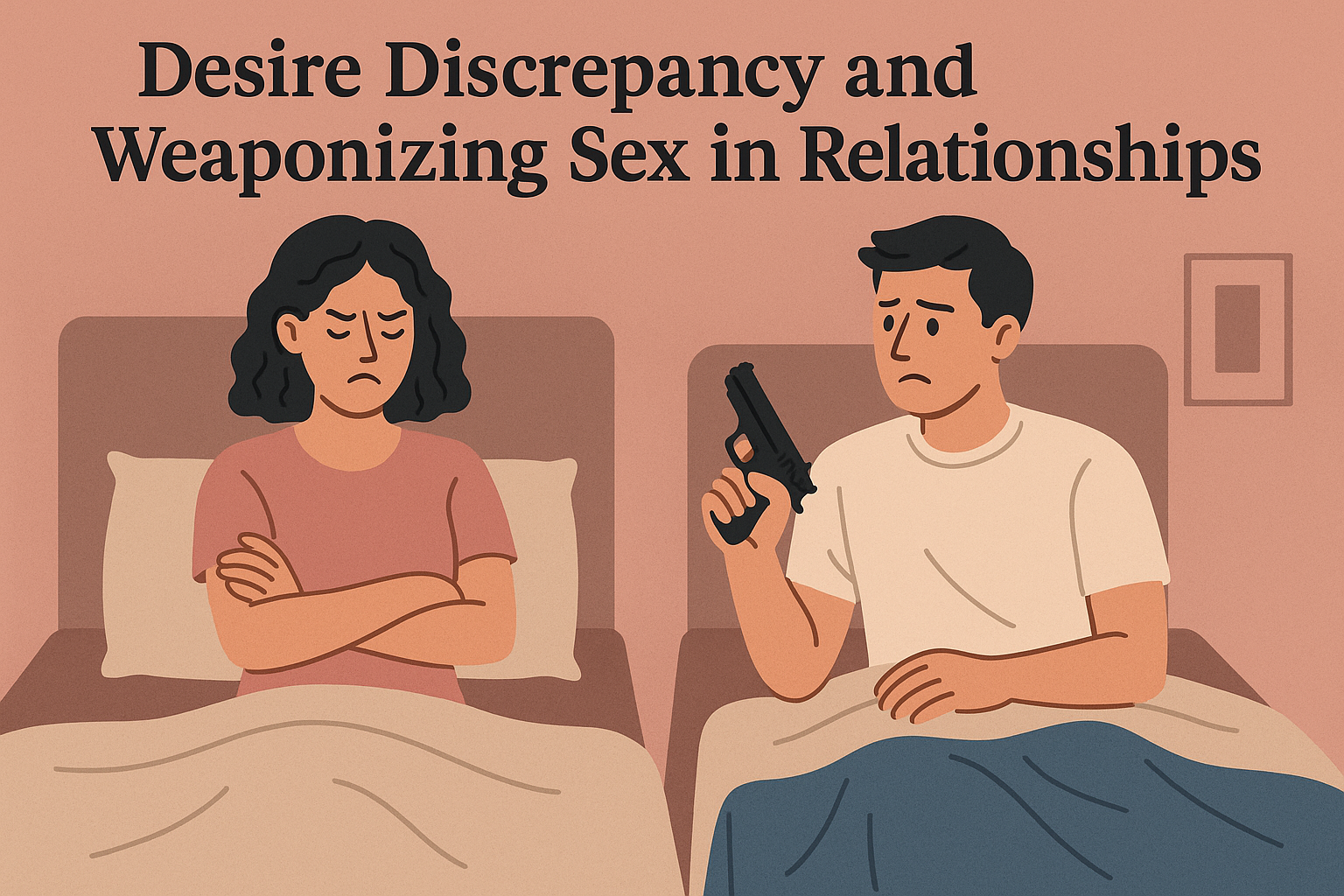
Desire Discrepancy and Weaponizing Sex in Relationships
One of the most common relational pitfalls is desire discrepancy, where partners' libidos misalign—one craving sex four times weekly, the other once monthly. Khanna explains this gap widens post-childbirth, in long-distance setups, or long-term pairings, leading to emotional or physical drift. If unaddressed, it fosters resentment, turning sex into a battleground.
Weaponizing sex exacerbates this, often with women (though not exclusively) withholding intimacy to express anger or unresolved conflicts. Biologically, men may have higher drives, but Khanna warns against using sex as punishment—it's unhealthy and erodes trust. Instead, frame it as a reward: positive reinforcement encourages desired behaviors, like a placebo effect boosting harmony.
Navigating desire discrepancy in long-term relationships requires communication over defensiveness. Khanna has seen divorces stem from such mismatches, including a case where a wife cited penis size and timing issues, gaslighting her husband into depression. Supportive partners build confidence; critical ones shatter it. Therapy uncovers psychological roots, like anxiety spilling into the bedroom. Broader advice includes scheduling intimacy, exploring non-penetrative options, or addressing external stressors like work-life balance to realign desires.
Understanding Cheating: Emotional, Physical, and Digital Dimensions
Cheating transcends physical acts, encompassing any breach of a relationship's verbal or nonverbal contract. Khanna defines it as actions your gut knows could hurt your partner, from emotional oversharing to physical encounters or digital flirtations. Causes include unmet needs—warmth, connection, or excitement—drawing people unconsciously toward outsiders.
Signs of emotional cheating include drifting apart, reduced sex, hiding phones, or withholding details. Khanna advises regular "relationship checkups" to catch issues early, like monthly discussions on alignment. For those betrayed, the trauma is devastating, shattering trust and triggering endless "whys." Therapy helps grieve, then decide: stay or leave? High-profile cases Khanna handles evoke deep empathy, as victims cycle through self-doubt.
Digital cheating rises with AI apps and interactive porn, offering stimulation without touch. Physical cheating often stems from the orgasm gap or dissatisfaction, pushing individuals outward. Khanna stresses understanding causes without justification—resolution lies in communication, not excuses. In broader context, betrayal trauma therapy uses techniques like EMDR to process pain, rebuilding self-worth independent of the relationship.
Evolving Relationships: From Monogamy to Openness
Modern relationships are shifting toward openness, challenging traditional monogamy. Khanna traces this to ancient roots: marriages are societal constructs for ease, not biological imperatives. Humans, like animals, aren't wired for lifelong exclusivity, yet cultural norms enforce it. Today, consensual non-monogamy—where partners agree to multiple connections—gains traction, as seen in cases where one partner's suppression leads to misery.
Modern open relationships work if consensual, but Khanna cautions they require therapy to navigate jealousy or closure difficulties. She's evolved her views, recognizing that forcing monogamy can ruin lives; better to explore ethically. Ideal relationships prioritize respect over love or sex—it's the foundation for resolving conflicts. Trust, ongoing learning, and mutual evolution keep bonds strong.
Expanding, polyamory studies show benefits like diversified emotional support, but risks include inequality if not balanced. Khanna urges pre-relationship talks on boundaries, ensuring gut-aligned actions. In India's conservative context, this evolution sparks moral debates, but personal fulfillment trumps societal policing.
Practical Steps to Enhance Sexual Health and Intimacy
Khanna offers three transformative steps for better sexual lives. First, explore your body mindfully—identify sensitive areas beyond orgasm goals to build self-awareness. Women, in particular, benefit from mirrors to counter negative societal messaging.
Second, communicate openly: Share desires, give feedback, and request changes without ego. This bridges gaps in sex therapy for mismatched libidos, turning defensiveness into collaboration.
Third, seek professional help promptly—visit a sex therapist like those at Kama Health India for issues like ED or vaginismus. Overcoming vaginismus involves addressing fears through gradual exposure and relaxation techniques.
These steps, rooted in psychology, promote holistic well-being. Incorporate them via journaling erogenous zones or weekly check-ins to sustain intimacy.
In summary, Aashita Khanna's insights illuminate how education, communication, and self-exploration can dismantle sexual taboos, fostering fulfilling relationships. From porn's pressures to desire mismatches, her message is clear: prioritize psychological health for physical harmony. Ready to transform your intimacy? Share your thoughts in the comments or book a session at Kama Health India today—your journey to better connections starts now.