 For Individuals
 For Enterprises
 Coaching Matters
 International Coaching Week
 Ebooks
 Podcasts
 Blogs
Blogs Alchemy
Ira Singhal IAS: “UPSC Is Self-Torture” | UPSC Reality, IAS Power & Corruption
Imagine dedicating years of your life to an exam that tests not just your knowledge, but your very resilience—physically, mentally, and emotionally. This is the raw reality shared by Ira Singhal, the first differently-abled woman to secure All-India Rank 1 in the UPSC Civil Services Examination in 2014. In a candid podcast discussion, Singhal pulls back the curtain on the grueling journey of preparing for UPSC exam mental challenges, her battles against systemic biases, the true power dynamics within the Indian Administrative Service (IAS), and her unfiltered views on corruption in the bureaucracy. Whether you're an aspiring civil servant grappling with the Ira Singhal UPSC journey or simply curious about the inner workings of India's governance, this post distills her insights into actionable wisdom. Expect to uncover the unvarnished truth about IAS officer daily life, the myths surrounding power and corruption, and how perseverance can lead to profound societal impact.
From Corporate Life to Civil Services: Ira Singhal's Path
Ira Singhal's story is a testament to reinvention. Born in Meerut, she pursued engineering followed by an MBA from the Faculty of Management Studies (FMS), Delhi. Her early career included stints at global giants like Coca-Cola and Cadbury, where she thrived in high-pressure corporate environments. However, a pivotal realization struck: despite working 12-hour days, she felt disconnected from meaningful impact. "There is no one whose life you have made better," she reflected in the podcast, highlighting a common sentiment among professionals seeking purpose beyond profits.
This dissatisfaction propelled her toward the UPSC, India's toughest exam, which annually sees over a million aspirants vying for fewer than 1,000 spots. Singhal's Ira Singhal UPSC journey wasn't impulsive; it stemmed from a desire for "direct hands-on work" in societal development. Moving to Delhi, she immersed herself in preparation, drawing from her engineering and MBA background to tackle the vast syllabus. Yet, as she notes, corporate jobs rarely prepare you for the isolation and uncertainty of UPSC prep. Expanding on this, many aspirants, like Singhal, transition from stable careers, often facing financial strains— a reality underscored by reports from coaching hubs like Mukherjee Nagar, where dropouts cite burnout as a top reason for quitting.
Her motivation? To leverage her skills for national service, where "twelve hours for the country" could transform lives. This shift exemplifies a growing trend: professionals in their mid-20s or 30s opting for civil services to align career with conscience, as per a 2023 survey by the Centre for the Study of Developing Societies (CSDS), which found 40% of UPSC toppers hail from non-traditional backgrounds.
The Harsh Reality of UPSC Preparation
Singhal doesn't mince words: preparing for UPSC exam mental challenges is "the greatest level of torture you could ever impose on yourself—physical, mental, emotional, and financial." In the podcast, she describes it as self-inflicted, optional agony, unlike mandatory schooling. The core torment? Persisting without guaranteed success. Aspirants invest years, often 2-4 attempts, in repetitive study without outcomes, fostering a cycle of hope and despair.
Key insights from her experience:
- Sustained Effort Amid Uncertainty: "You keep doing the same thing for years, and you don't know whether any results will come." This mirrors the psychological strain reported in studies by the Indian Journal of Psychiatry, where UPSC aspirants show higher rates of anxiety and depression.
- Avoiding External Blame: Singhal warns against externalizing failures—blaming illness, family issues, or lack of mentors. Instead, self-accountability is crucial: "The day you admit that... you can also succeed."
- Her Personal Trials: In her 2010 attempt, severe illness during exams affected her performance, yet she cleared it. She refused excuses, emphasizing lifelong decisions shape outcomes.
Expanding on this, UPSC preparation demands a holistic strategy. Aspirants often juggle part-time jobs or family support, but as Singhal's four attempts (2010-2014) show, resilience trumps shortcuts. With an average success rate of 0.1%, per UPSC data, her advice resonates: Maintain hope without delusion, and correct personal flaws iteratively.
Battling Rejection and Disability Bias
As a person with a disability (scoliosis), Singhal faced amplified rejections. Despite clearing UPSC multiple times, bureaucratic hurdles denied her postings, citing inability to "push, pull, or lift"—criteria irrelevant to desk-based IAS roles. "Were you considering me for a porter job?" she quipped, leading to a landmark court battle in 2014.
Her Ira Singhal UPSC journey involved legal fights for equality, rooted in India's Constitution. Post-third attempt, a judgment initially barred her, but she persisted with a fourth try amid appeals. This resilience stems from lifelong battles: inaccessible education, transport, and societal biases. "As a person with a disability... you've developed a habit of facing rejection," she explains.
In broader context, her case highlights disability inclusion gaps in India. The Rights of Persons with Disabilities Act, 2016, mandates 4% reservations, yet implementation lags, with only 1% of civil servants disabled, per government reports. Singhal's victory not only secured her rank but inspired others, proving perseverance against systemic odds can yield policy shifts.
Topping the exam brought relief, not glory: "It was just a moment of relief... I would not have to go through this again." Her rank elevated her voice, challenging perceptions of disabled individuals as voiceless.
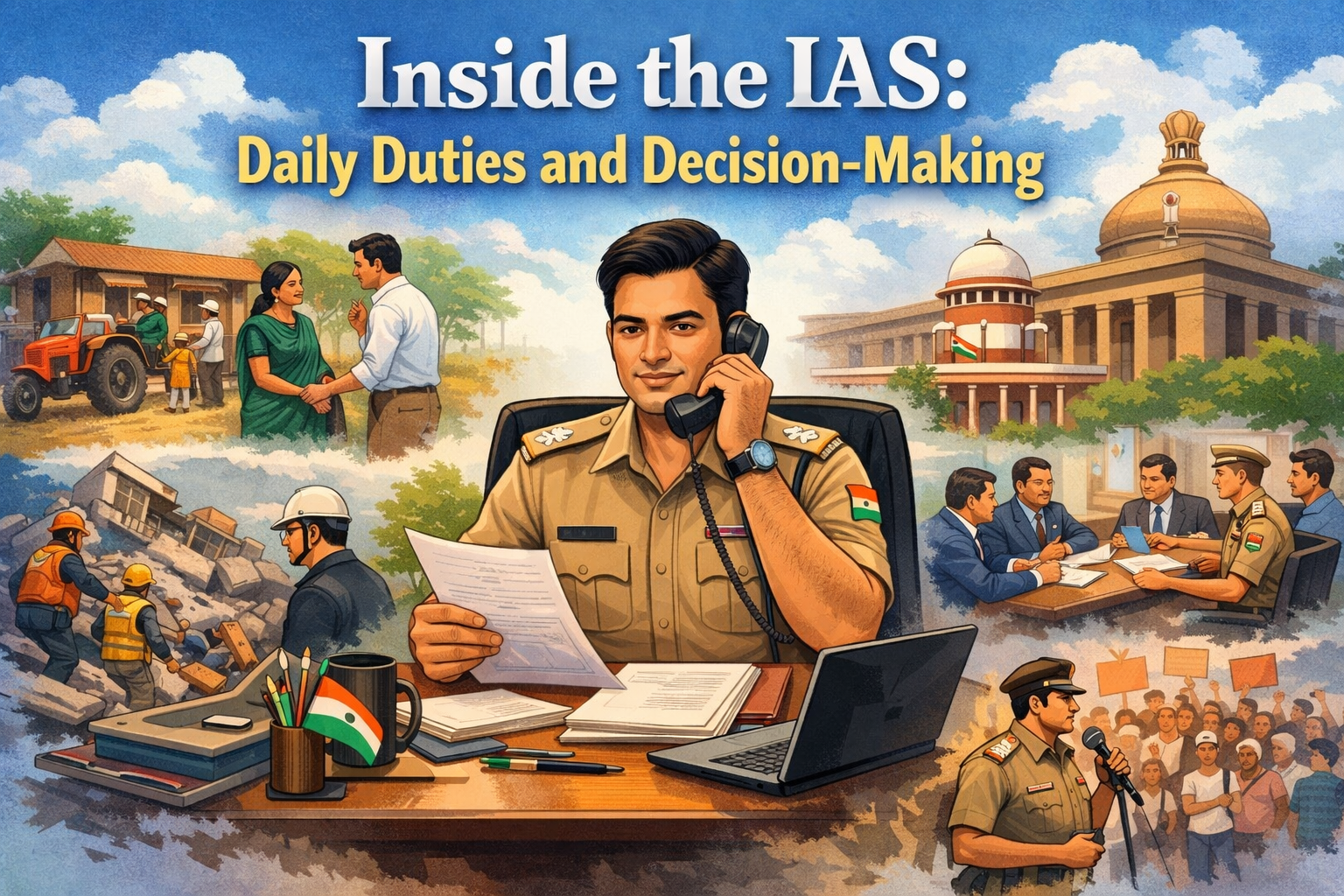
Inside the IAS: Daily Duties and Decision-Making
Dispelling myths, Singhal describes IAS officer daily life as unpredictable: "There is no typical day... every day is a new day." Priorities shift with crises— from policy fixes to on-ground interventions—a far cry from routine corporate jobs.
In her postings, like in Arunachal Pradesh's Tirap district, she ensured peaceful elections amid insurgency threats. "We had the most peaceful election... no kidnappings or killings." Her neutrality and strictness stemmed from a fearless leadership ethos: "If you are afraid, don’t come."
Another highlight: Rescuing 340-350 children from illegal labor over a year, collaborating with NGOs like those linked to Kailash Satyarthi. Success hinged on listening and verifying inputs, regardless of motives. "Your job is to stop the wrong act."
These anecdotes underscore IAS roles in governance: Shaping policies (officers generate ideas, politicians provide broad direction), handling pressures affecting millions, and testing situational awareness. As Singhal notes, entry-level officers (22-24 years old) often lack maturity, advocating for mandatory work experience to minimize errors with high stakes.
Power, Politics, and Corruption in Bureaucracy
Addressing corruption in Indian bureaucracy, Singhal rejects it as a "necessary evil." "How can anything be a necessary evil?" she asserts, tracing roots to cultural practices like temple offerings for favors. Her stance: Integrity is sustainable; many officers quit for corporate riches if money drives them.
She hasn't faced resistance, crediting supportive bosses and politicians. Power dynamics? Officers hold systemic knowledge, initiating most ideas. Challenges arise when intentions misalign, but patience resolves them. On young officers bowing to politicians: It's often due to inexperience and high stakes—another reason for her push for prior work experience.
In context, Transparency International's 2023 Corruption Perceptions Index ranks India 93rd, yet reforms like digital governance (e.g., e-filing) curb petty corruption. Singhal's view: Focus on positive impact, not hero-worship, as everyone has merits and flaws.
Key Lessons from Ira Singhal's Philosophy
Singhal's wisdom extends to life: Encourage kids to try everything, sans humiliation. Pride in achievements for others, not self. On wealth flight: Stay and invest in India—improve education, infrastructure.
In rapid-fire:
- UPSC judges hard work and logic well.
- Elite aspirants dominate due to privileges.
- Mental health crisis from uncertainty and blame-shifting.
- Best time to move on: When clarity wanes.
Her self-definition: A person striving for others' happiness, beyond titles.
In summary, Ira Singhal's insights reveal UPSC as a crucible of self-discovery, IAS as a platform for impact, and integrity as the antidote to corruption. Her story inspires resilience amid adversity. Ready to apply these lessons? Share your UPSC experiences in the comments below, or subscribe for more motivational content on civil services journeys.